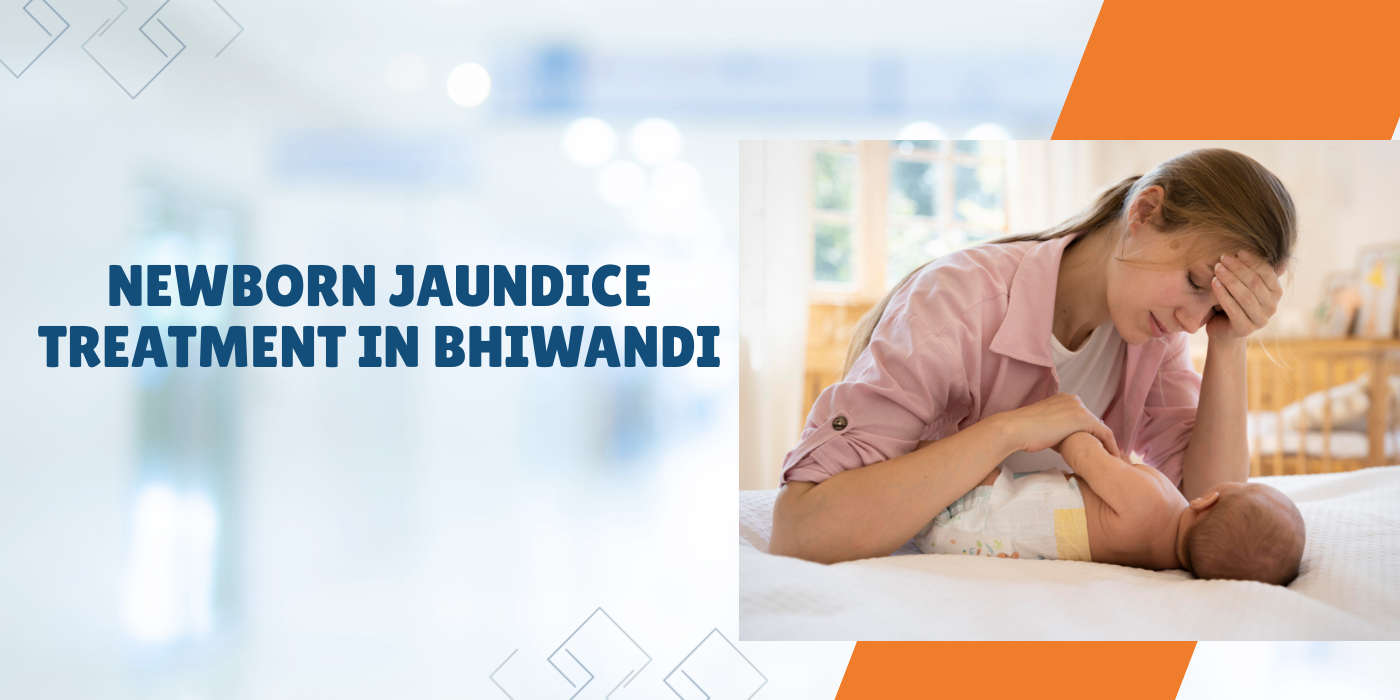
Newborn Jaundice Treatment in Bhiwandi
The birth of a newborn is a joyful moment, but concerns can arise when parents notice yellowing of their baby’s skin or eyes. Newborn jaundice is one of the most common conditions seen in the first few days of life. While many cases are mild, some require timely medical attention to prevent complications.
According to pediatric guidelines, early diagnosis and appropriate treatment of jaundice ensure a smooth recovery. Access to specialized newborn jaundice treatment at a trusted children’s hospital in Bhiwandi allows parents to seek reassurance and care without delay.
Dr. Ammey G Gorey, Pediatrician and Neonatologist, explains:
“Newborn jaundice is usually harmless, but it should never be ignored. Monitoring bilirubin levels at the right time helps us decide whether simple observation or active treatment is needed.”
Newborn jaundice occurs when there is an excess of bilirubin in a baby’s blood. Bilirubin is produced during the normal breakdown of red blood cells, and a newborn’s liver may take time to process it efficiently.
In newborns:
- The liver is still immature
- Bilirubin clearance is slower
- Temporary buildup may occur
Most babies develop jaundice between the second and fifth day after birth. While many cases resolve on their own, higher bilirubin levels need medical supervision.
Dr. Ganesh Gorey, Senior Pediatrician in Bhiwandi, notes:
“Parents often worry when they see yellow discoloration, but the key is knowing when jaundice is normal and when it needs treatment. Medical evaluation removes this uncertainty.”
Signs and Symptoms of Newborn Jaundice
Yellowing of the skin, starting from the face
Poor feeding or difficulty latching
Dark urine or pale stools
Yellow discoloration of the whites of the eyes
Excessive sleepiness or reduced activity
Dr. Ammey G Gorey emphasizes:
“If jaundice spreads beyond the face or the baby becomes unusually sleepy or feeds poorly, parents should consult a pediatrician without delay.”
How We Diagnose Jaundice in Newborns
Accurate diagnosis is essential to determine the severity and cause of jaundice. Our hospital follows a structured and safe diagnostic approach.
Bilirubin Level Test
A blood test measures total serum bilirubin to assess:
● Severity of jaundice
● Need for treatment
● Frequency of monitoring
Transcutaneous Screening
This painless screening uses a handheld device placed on the baby’s skin to estimate bilirubin levels and is often used for quick assessments.
Blood Group & Compatibility Tests
In some cases, blood group incompatibility between mother and baby can increase bilirubin levels. Identifying this early helps guide treatment.
Dr. Ganesh Gorey explains:
“Diagnosis is not just about numbers. We look at the baby’s age, weight, feeding pattern, and overall health before deciding the treatment plan.”
Newborn Jaundice Treatment Options at Our Hospital
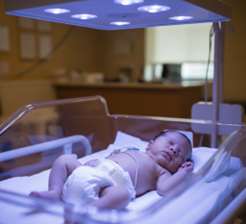
Phototherapy
Phototherapy uses special lights to break down bilirubin so it can be eliminated naturally.
“Phototherapy is safe, effective, and remains the gold standard treatment for most cases of newborn jaundice,” says Dr. Ammey G Gorey.
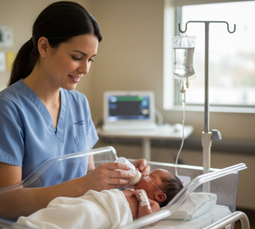
Feeding & Hydration Support
Adequate feeding helps flush bilirubin from the body. Mothers receive guidance on breastfeeding, and supplemental feeds are advised when required.
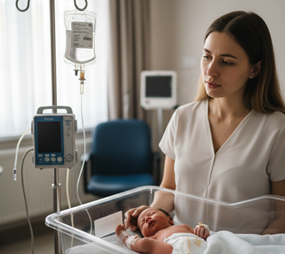
IV Fluids
For babies who are dehydrated or feeding poorly, IV fluids may be provided to support recovery.
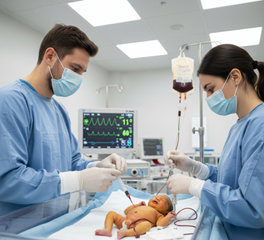
Exchange Transfusion
In rare, severe cases, an exchange transfusion may be necessary to rapidly lower bilirubin levels. This is performed under strict monitoring by experienced neonatologists.
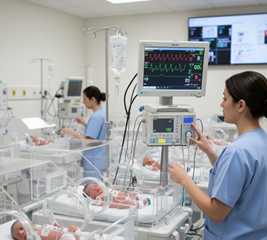
NICU Monitoring
High-risk babies are monitored in the NICU with continuous observation to ensure safety and timely intervention.
Dr. Ganesh Gorey adds:
“Close monitoring in a NICU setting allows us to respond immediately if bilirubin levels rise unexpectedly.”
Why Choose Our Children’s Hospital for Jaundice Treatment?
Parents trust Unicure Hospital for newborn jaundice care due to our unwavering commitment to safety, medical expertise, and compassionate support for both babies and their families.
Experienced Pediatricians and Neonatologists
Our team of highly trained pediatricians and neonatologists bring years of experience in handling neonatal conditions. They specialize in diagnosing and treating newborn jaundice, ensuring the best care possible for your baby.
Advanced Diagnostic and Treatment Facilities
We are equipped with state-of-the-art diagnostic tools, including bilirubin level tests and transcutaneous screening, to accurately assess your baby’s condition. Our treatment facilities, such as phototherapy lights, are designed for safe and effective management of jaundice.
NICU Support for High-Risk Newborns
For newborns who require extra attention, our NICU (Neonatal Intensive Care Unit) provides specialized care and continuous monitoring. We ensure that babies with severe jaundice or other complications receive immediate and thorough care in a controlled environment.
Family-Centered Care with Clear Communication
We prioritize open and clear communication with parents at every step of the treatment process. Our family-centered care approach ensures you feel supported and informed about your baby’s health and recovery, every step of the way.
24×7 Emergency and Neonatal Services
Our hospital offers round-the-clock emergency services, with pediatric and neonatal specialists available at all times. Whether it’s a routine check-up or a sudden concern, we’re here to provide immediate, expert care whenever you need it.
When to Seek Immediate Medical Care
Seek urgent medical attention if your newborn:
Develops jaundice within the first 24 hours
Is difficult to wake or excessively lethargic
Has very high bilirubin levels
Shows rapidly worsening yellow discoloration
Refuses feeds or shows signs of dehydration
Dr. Ammey G Gorey cautions:
“Timely treatment makes all the difference. Delaying care in severe jaundice can increase the risk of complications.”
Speak to a qualified Pediatrician to create a safe and timely vaccination plan for your little one.
FAQs on Newborn Jaundice
1. Is newborn jaundice common?
Yes, it is very common and often resolves with proper monitoring.
2. Can newborn jaundice go away on its own?
Mild jaundice may resolve naturally, but medical evaluation is essential.
3. Is phototherapy safe for babies?
Yes, when administered under medical supervision, it is safe and effective.
4. How long does treatment usually take?
Treatment duration varies from a few hours to a few days, depending on bilirubin levels.
5. Can untreated jaundice cause problems?
Severe untreated jaundice can lead to complications, which is why early care is crucial.